


New Delhi: The word anti-inflammatory has practically become a household word. From herbs like turmeric and oregano to foods like berries and cruciferous vegetables, there is a myriad of products that have anti-inflammatory properties.
Following an anti-inflammatory diet or supplementing with anti-inflammatory substances has become more popular than ever. But what does inflammation mean in the first place? And is fighting inflammation really that important?
What is inflammation?
Inflammation is a vital part of the body's immune response. The word incorporates the Greek for flame, and indeed an inflamed body part may feel ‘on fire’.
In its traditional clinical description, inflammation has four characteristics: calor (heat), rubor (redness), tumor (swelling and dolor (pain). They are the manifestations of the body's defence against injury or against invasion by foreign material or microorganisms, such as viruses and bacteria; and repair damaged tissue.
However, Inflammation does not necessarily mean that there is an infection, but an infection can cause inflammation.
Inflammation in action
When your cells are in danger, they send a signal to your immune system. Your immune system then sends its fighter to that area to battle off any foreign invaders and help begin the healing process. Fluid from blood vessels near the area also gets released which causes swelling to occur.
This whole process ensures that your body stays protected and that your wounds heal over time.
Without inflammation, wounds would fester and infections could become deadly. Inflammation can also be problematic, though, and it plays a role in some chronic diseases.
What Are the Symptoms of Inflammation?
- Redness
- Swollen joint that's sometimes warm to the touch
- Joint pain
- Joint stiffness
- Loss of joint function
Often, only a few of these symptoms are present. Inflammation may also be associated with general flu-like symptoms including:
- Fever
- Chills
- Fatigue/loss of energy
- Headaches
- Loss of appetite
- Muscle stiffness
Inflammation can occur anywhere, acutely in the skin around a wound or a sting, or in less visible sites such as the lining of the middle ear, or of the bladder, or of the gall bladder. Chronically it can be related to persistent infection, ulceration, mechanical or chemical irritation, or autoimmune disease.
There are two types of inflammation: Acute and Chronic (sometimes called systemic) inflammation.
When inflammation happens normally and occasionally, it’s labeled as acute, and it’s actually very important for your body to undergo this type of stress and response. It ensures that your immune system is healthy and functioning properly.
Acute inflammation arises after a cut or scrape in the skin, an infected ingrown nail, a sprained ankle, acute bronchitis, a sore throat, tonsillitis or appendicitis. It is short-term and the effects subside after a few days.
On the other hand; Chronic inflammation happens when your immune system is basically turned on all of the time. While we need the inflammatory response to heal us from wounds and overcome infections, excessive inflammation, on the other hand, damages organs, creates blood clots, and causes muscles to waste away.
Chronic inflammation is long-term and occurs in “wear and tear” conditions, including osteoarthritis, and autoimmune diseases, such as lupus and rheumatoid arthritis, allergies, asthma, inflammatory bowel disease. Habitual or environmental factors, such as excess weight, poor diet, lack of exercise, stress, smoking, pollution, poor oral health and excessive alcohol consumption can also lead to chronic inflammation.
Often, acute inflammation is perceived as "good," because it is the body’s attempt to heal itself after an injury, and chronic inflammation as "bad."
Causes of chronic inflammation
There are various causes of chronic inflammation…and many can be attributed to our modern lifestyle. Things like smoking, drinking, obesity, increased stress levels, and increased sugar consumption all can lead to this inflamed state.
Many people could be experiencing chronic inflammation and be totally unaware of it. There are a few signs that your body may be inflamed. These include things like:
- Stubborn belly fat that won’t go away
- You experience frequent fatigue or brain fog
- You have digestive issues such as bloating, gas, or constipation
- High blood sugar levels
- Skin issues like psoriasis or eczema
So, if you do experience any of these symptoms, it may be time to re-examine your diet and lifestyle choices.
Risks of chronic inflammation
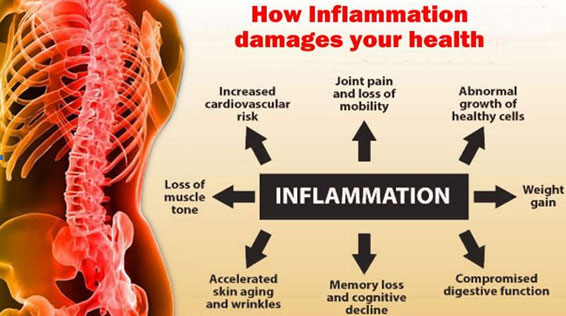
Sometimes it’s hard to tell the cause from the effect: most chronic diseases come along with inflammation, but is it the inflammation that causes the disease, or the disease that causes the inflammation? But for at least a few, there’s some evidence that inflammation is actually the cause.
For example, cytokines are an important part of the immune reaction to infections, inflammation, and injuries of all kinds. But some of them are proinflammatory. Proinflammatory cytokines and chronic inflammation can make all kinds of diseases worse. Some of them may be:
- Heart disease- Chronic inflammation has been linked to cardiovascular diseases. A large-scale study at Stanford University found that coronary artery disease risk might be linked to genes associated with inflammation.
- Bone Health- Chronic inflammation is associated with increased bone loss and lack of bone growth.
- Lung issues- Chronic inflammation in the lungs is a factor in many problems, such as asthma, chronic obstructive pulmonary disease (COPD). When lungs are inflamed, fluid can accumulate, and the airways can narrow, making breathing difficult.
- Cancer- Immune cells attack fledgling tumors in an inflammatory response. These immune cells infiltrate the tumor, but instead of killing it, the tumor uses the nutrients and oxygen that are part of the inflammatory response to grow.
Other includes:
- Anger disorders and aggressive behavior
- Alzheimer’s Disease
- Depression
- Obesity and diabetes: obesity-induced inflammation contributes to the development of diabetes, and diabetes does nothing for your weight.
Scientists are still working to understand all the implications of chronic inflammation on the body’s health, but it is clear that it affects the body in these myriad ways.
But to fight against it, each person must tailor his lifestyle to counter them. Diet alone isn’t enough to keep chronic low-level inflammation at bay, but it’s a good start.
Anti-inflammatory diet and foods
Anti-inflammatory diets have become popular in recent years. Nutritionists also recommend incorporating more of the following foods into your diet:
- Fatty cold-water fish (such as salmon, tuna, mackerel, herring)
- Berries
- Tree nuts (such as walnuts, almonds, hazelnuts, etc., but excluding peanuts, a groundnut)
- Whole grains
- Dark leafy greens
- Low-fat dairy products
- Tomatoes
- Beets
- Ginger and turmeric
- Garlic
- Olive oil
Also, incorporating antioxidant-rich foods, like fruits and vegetables, will also help tone down the inflammation in your body. Traditional healing foods, like bone broth, should also be consumed when possible.
Lastly, Some Do's And Undo's:
DO
- Add some anti-inflammatory foods to your diet (see below).
- Include more organic food to your grocery shopping.
- Increase the fiber in your diet.
- Take a probiotic supplement (widely available a health food stores).
- Switch to olive or safflower oil.
- Drink coffee 1-5 times a day.
UNDO
- Cut down sharply on your sugar intake.
- Cut out junk food and fast food.
- Throw out stale food, including stale cooking oils and leftovers more than a day old.
- Reduce overall fat intake.
- Reduce salt intake.
- Use no alcohol or at most one drink a day (there is some evidence that a single drink is anti-inflammatory while adding more alcohol is definitely inflammatory).
Also, a natural, organic, whole-food diet should be maintained over a lifetime to keep low-level inflammation.
Self-care and stress-relief techniques should also not be understated. We all carry around loads of stress and it takes a major toll on our body.
Ensuring that we take care of our mental well-being is just as important as our physical well-being.
Eat well. Sleep well. Live well. It seems so simple, but it can be incredibly powerful.
References:
https://www.livescience.com
https://flipboard.com
https://ultimatepaleoguide.com
https://www.medicalnewstoday.com