

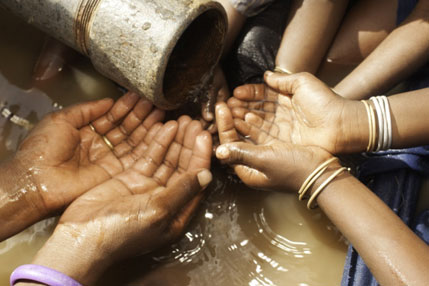
New Delhi: In a reply to a question in the LokSabha, the Union ministry of water resources said 239 million people across 153 districts in 21 states drink water that contains high levels of arsenic.
That’s around a fifth of the country’s population, and by any standards, that’s an appalling statistic.
The actual number could be higher. India pegs arsenic concentrations above 50 parts per billion as harmful; in the US, it is 10 parts per billion.
Overview of the Problem:
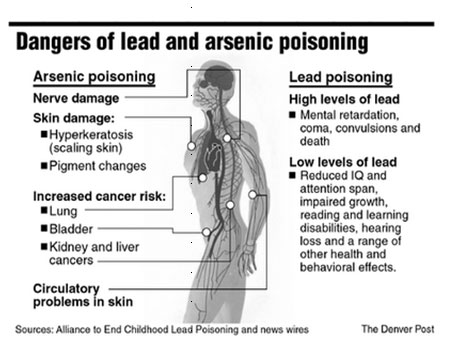
Arsenic is one of the 10 chemicals classified as a public health concern by the World Health Organization; it slowly poisons the body, potentially causing skin lesions, damage to the peripheral nerves, gastrointestinal ailments, diabetes, renal (kidney) failure, cardiovascular disease, and cancer.
At least half the people who were known to be at risk of arsenic contamination live in the Ganga-Brahmaputra basins of Bangladesh and India across the states of West Bengal, Bihar, Jharkhand, Uttar Pradesh, Assam, Manipur and Chhattisgarh.
What is Arsenic?
Arsenic (As) is an odourless and tasteless metalloid widely distributed in the earth’s crust. It is the 26th abundant element in the earth's crust. Elemental arsenic is a member of Group VA of the periodic table, with nitrogen, phosphorus, antimony and bismuth. It has an atomic number of 33 and an atomic mass of 74.91.
Its Various Forms & Where It Is Found?
Arsenic is a naturally occurring element that is frequently characterized as a metal, despite having properties of both a metal and a non-metal.
In its elemental state, arsenic is a grey solid material; however, arsenic is often found in the environment combined with other elements. These arsenic compounds are generally white or colourless powders that have no smell or taste, making them difficult to detect in food, water, or air.
Arsenic is often found in rocks that contain other valuable metals, such as copper and lead. When smelters heat this or to retrieve the other metals, the arsenic is often released into the air as dust. Arsenic is also found in coal, and can be released through coal-fired power plants or incinerators that burn arsenic-containing products. Arsenic itself is also mined and used in industrial processes. Additionally, about 90% of the arsenic produced each year is used to pressure-treat wood to preserve it and resist rotting and decay. Arsenic is also used in the production of chemical pesticides.
Once arsenic is released into the environment, it attaches to other particles and can easily spread as wind-blown dust. Once in the air, arsenic can stay airborne for many days and travel great distances.
Arsenic can also dissolve in water, and thus can easily contaminate lakes, rivers, and ground water resources. Drinking arsenic- contaminated water is a serious health risk to humans.
Although organic arsenic can accumulate in some types of fish and shellfish, this form of the element is much less harmful.
Common Exposure Pathways and Health Risks of Arsenic:
Arsenic can exist in air, water, soil, or food, and all of these present potential pathways for human exposure.
Very low concentrations of arsenic are common in soil; however, in areas within the vicinity of arsenic-rich deposits, the natural concentration of arsenic in soil can increase over a thousand fold. In these areas, it is common to find ground water that is also contaminated with high concentrations of arsenic. For this reason, concentrations of arsenic in ground water are often much higher than those in surface water.
This is a particular problem in India, Nepal, and Bangladesh, where naturally occurring arsenic contaminates wells used by millions of people. Arsenic’s ranking in the list of the six top toxic threats is largely due to the number of people affected by naturally occurring arsenic contamination of ground water in South Asia.
Because of arsenic’s ability to cling to other particles and travel as dust, the inhalation of this element is a common exposure pathway.
Workers in the fields of copper and lead smelting, mining, wood treatment, or pesticide application can be exposed to high levels of arsenic in workplace air.
Infact, Arsenic can be ingested through food. Seafood is the most common consumption pathway of arsenic, although it can also be found in cereals, mushrooms, and poultry. But, the arsenic found in most seafood is a type called arsenobetaine, which is less harmful than other forms of the element.
However, Arsenic has long been recognized as a poison, whose large oral doses can cause death and lower doses can cause decreased production of red and white blood cells.
One common characteristic effect of arsenic poisoning is visible changes to the skin. People exposed to arsenic often have patches of dark skin, “corns,” and “warts.” Arsenic is also a human carcinogen, and exposure can leads to skin damage including keratosis and skin cancer, internal cancers such as that of the lung and bladder, and diseases of the vascular system.
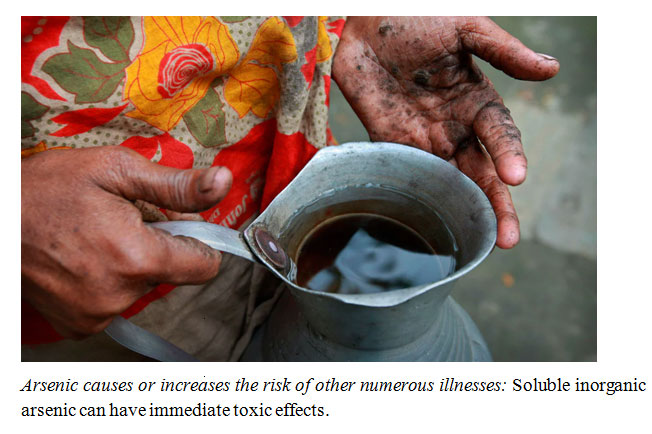
Ingestion of large amounts can lead to gastrointestinal symptoms such as severe vomiting, disturbances of the blood and circulation, damage to the nervous system, and eventually death. When not deadly, such large doses may reduce blood cell production, enlarge the liver, produce tingling and loss of sensation in the limbs, and cause brain damage.
Also, other health problems, such as diabetes, cancers of the other organs and adverse reproductive outcomes have been observed, but the evidence is not yet conclusive, although it keeps increasing.
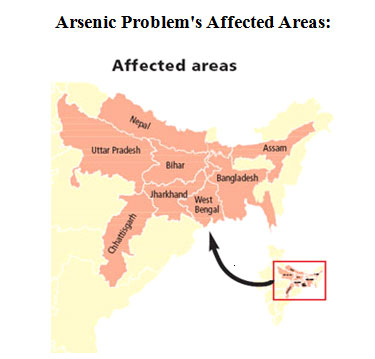
Within India, arsenic concentration is particularly high in and around the Ganges delta in eastern and northeastern India, affecting the states of Bihar, West Bengal, Jharkhand, Uttar Pradesh, Assam, Manipur and Chhattisgarh. This is due to silt from the Himalayas containing arsenopyrite.
WHO’s provisional guideline value for arsenic in drinking water is - 0.01 mg/l (10 μg/l). And, as per Indian Standards for Drinking Water; Permissible limit of arsenic in India in absence of an alternative source is - 0.05 mg/l (50 μg/l).
Especially the state of Bihar, in eastern India, is one of the country's most impoverished states. More than 10 million people in the state are estimated to be threatened with arsenic poisoning or arsenicosis from contaminated groundwater.
Bihar’s heavy cancer burden is largely due to high levels of arsenic(as stated in the beginning of article), a known carcinogen, in its groundwater. Over the last 15 years, field studies in Bihar have thrown up arsenic concentrations that are far higher – up to 3,880 parts per billion.
History of India’s Hidden Crisis:
The number of habitations affected by arsenic in India has increased from 3,728 in 2012-13 to 7,535 in 2015-16. This is because of the overuse of groundwater for irrigation and drinking.
Arsenic has entered India’s drinking water from the Himalayas, washed down in the form of arsenopyrite, a conjugate of arsenic and iron, till it settled in riverbeds along the Gangetic plain as silt.
When the rivers changed course, human settlements sprung up even on the floodplains. And, those people in such settlements in Bihar, Uttar Pradesh,West Bengal and Bangladesh, used river water for drinking and irrigation.
As mentioned, arsenic previously occurred in a harmless insoluble conjugate with iron called arsenopyrite but overuse of groundwater has split this compound, contaminating groundwater with a soluble ionic form of arsenic; harmful for humans.
Over-exploitation of groundwater started in India in the 1970s when millions of tube wells were installed in the Ganga delta. Concerned over the high levels of bacterial contamination in river water that was leading to the spread of diseases like diarrhoea, international health organisations advocated a shift to the use of groundwater pumped by borewells to prevent diarrhoea from surface water sources such as tanks, ponds and open wells.
The recommendation had unforeseen and expensive consequences because this shift laid the foundation of arsenic problem in India.
Arsenopyrite, which found between 60 feet and 200 feet underground, is stable as long as it is insulated from air. But, as explained, groundwater levels fell below 60 feet, this underground arsenopyrite came in contact with air and split into the ionic forms of arsenic and iron both which easily enter water and are taken up by cattle and locally-grown crops and ultimately ingested by humans.
Today, India has over 30 million groundwater extraction points.
What to be done:
Despite the crisis, arsenic or other pollutants such as fluorides, does not get the attention it deserves, especially when compared to surface water contamination because the latter is visible. Moreover, there is no law yet to check groundwater withdrawal.
This severe environmental-health crisis has to be contained quickly before it can expand more. Along with periodic testing of water in affected areas and individualised testing of each hand pump or tube well (marking it as safe/unsafe), it is important to encourage people to opt for low-cost, local solutions such as rainwater harvesting that can ensure clean drinking water.
However, states such as Bihar have set up filtration units but the maintenance of filters has always been a problem. This needs to be addressed.
Additionally, governments have to curb the use of groundwater and keep a strict control on agricultural and industrial effluents that pollute aquifers that recharge groundwater.