


New Delhi:In a 'ground-breaking' development, scientists have developed a drug that can treat Huntington's disease by lowering the level of the harmful protein in the nervous system.
Huntington's disease is characterised by the progressive loss of nerve cells in the brain. This fatal disorder is caused by a hereditary defect in a single gene.
The first drug targeting the cause of Huntington’s disease was safe and well-tolerated in its first human trial led by UCL scientists. It successfully lowered the level of the harmful huntingtin protein in the nervous system.
After over a decade in pre-clinical development, this first human trial of huntingtin-lowering drug began in late 2015, led by Professor Sarah Tabrizi (UCL Institute of Neurology) and sponsored by Ionis Pharmaceuticals.
The trial involved enrolling 46 patients with early Huntington’s disease at nine study centres in the UK, Germany and Canada.
Each patient received four doses of either IONIS-HTTRx or placebo, given by injection into the spinal fluid to enable it to reach the brain. As the phase 1/2a trial progressed, the dose of IONIS-HTTRx was increased several times according to the ascending-dose trial design.
Patient safety was monitored throughout the study by an independent safety committee.
As per the researchers, the announcement at completion of the trial confirms that IONIS-HTTRx was well-tolerated by the trial participants and its safety profile supports further testing in patients
Professor Tabrizi, Director of the UCL Huntington’s Disease Centre and IONIS-HTTRx Global Chief Investigator, said: “The results of this trial are of ground-breaking importance for Huntington’s disease patients and families. For the first time a drug has lowered the level of the toxic disease-causing protein in the nervous system, and the drug was safe and well-tolerated. The key now is to move quickly to a larger trial to test whether the drug slows disease progression.”
He also added that, “The results of this trial are of ground-breaking importance for Huntington's disease patients and families.”

Huntington Disease:
First described by Dr. George Huntington in 1872, Huntington disease (HD) is a relatively common hereditary neurological condition that most commonly affects people in their adult years i.e. thirties or forties.
Huntington disease is a progressive brain disorder that causes uncontrolled movements, emotional problems, and loss of thinking ability.
HD has been well studied and documented in family histories across the world. This ultimately led to the discovery of the HD gene, now known to be responsible for the disorder.
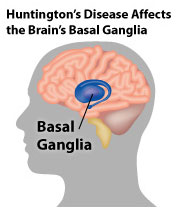
Early signs and symptoms of this disorder can include irritability, depression, small involuntary movements, poor coordination, and trouble learning new information or making decisions.
Many people with Huntington disease develop involuntary jerking or twitching movements known as chorea. As the disease progresses, these movements become more pronounced. Affected individuals may have trouble walking, speaking, and swallowing. They also experience changes in personality and a decline in thinking and reasoning abilities. Individuals with the adult-onset form of Huntington disease usually live about 15 to 20 years after signs and symptoms begin.
On the other hand, a less common form of Huntington disease known as the juvenile form begins in childhood or adolescence. It also involves movement problems and mental and emotional changes.
Additional signs of the juvenile form include slow movements, clumsiness, frequent falling, rigidity, slurred speech, and drooling. School performance declines as thinking and reasoning abilities become impaired. Seizures occur in 30 percent to 50 percent of children with this condition. Juvenile Huntington disease tends to progress more quickly than the adult-onset form; affected individuals usually live 10 to 15 years after signs and symptoms appear.
Treatment:
Although, there is currently no cure for Huntington’s disease but the symptoms can be alleviated in a number of ways to improve quality of life, such as:
Drugs can be given to prevent involuntary movements and control mood swings and depression
Speech therapy can be given to improve speech and ease swallowing
A well-balanced diet can prevent weight loss and may have a positive impact on other symptoms.
But now with this newdrug, researchers can treat Huntington's disease by lowering the level of the harmful protein in the nervous systemother than these treatment options.
One can say this announcement is likely to stand as one of the biggest breakthroughs in Huntington’s disease since the discovery of the HD gene in 1993.
The full results of the IONIS-HTTRx program have yet to be released in detail or published in a peer-reviewed journal.
Also, researchers hope the findings could one day translate to treatments for other degenerative diseases, such as Alzheimer’s and Parkinson’s.
References:
http://www.ucl.ac.uk
https://ghr.nlm.nih.gov
https://www.sciencealert.com
https://health.economictimes.indiatimes.com