


New Delhi: Obesity rates have doubled over the past two decades and some countries have a bigger obese population than others.The UK is the most overweight country in Western Europe, the Organisation for Economic Co-operation and Development (OECD) has recently stated.
OECD says, “Over 63 percent of adults in Britain are overweight.” The 2017 Obesity Update report found that the UK is the sixth fattest nation out of 35 OECD member countries, with a 27 percent adult obesity rate.
Adult obesity rates in the UK have increased by 92 percent since the 1990s, while in the US with an obesity rate of 38 percent; the increase has been a “mere” 65 percent. A further 36 percent of the UK population are overweight.
However, the OECD Health at a Glance report said the overall health and life expectancy of Britons remained average - aided by a reduction in smoking and adult drinking - despite a noted shortage in hospital beds and staff.
A number of OECD nations, such as Australia and Canada, have managed to reduce and stabilise obesity levels in recent years, but Japan remains lowest at 4%.
Britain is, however, doing better at tackling child obesity. Figures show it is stable at 24%, remaining below average over the past decade, at a time when it is increasing rapidly across the rest of Europe.
But, the report also pointed a finger at the UK for its teenage drinking and shortage of doctors and nurses.OECD says “more could be done” to fight the issue, while recognising the UK’s efforts to ban super-size chocolate bars from hospitals and the impending sugar tax.
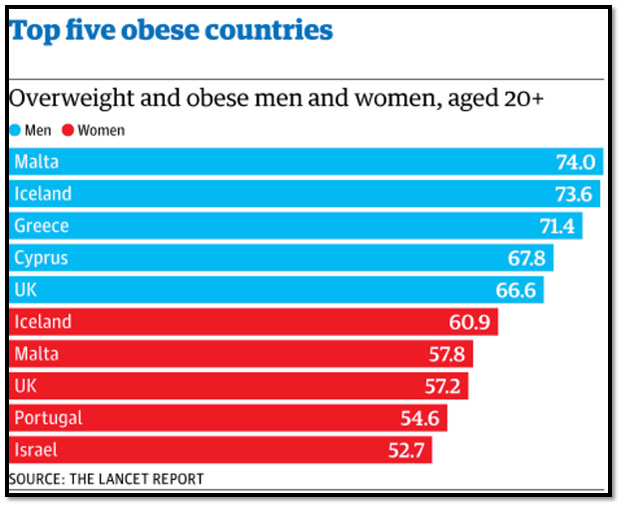
Although there are numerous countries around the world that have high statistics on obesity, for example; The US, Mexico, New Zealand, Hungary and Australia fare worse than the UK, though. There are also countries that have very low obesity rates. The countries with the lowest levels of obesity are Japan, Korea, Italy and Switzerland.
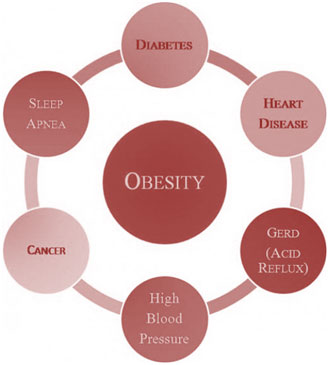
Obesity statistics done by the Wellness International Network (WIN) shows that, though obesity is not a specific disease in itself, it sure is a breeding ground for several ailments and health conditions.Well, obesity epidemic is affecting humans in different ways. Obese people are at risk of cholesterol, diabetes and heart disease. Apart from the health matters, the productivity can be seen affected on a large scale.
A person is considered obese if they have a body mass index (BMI) of more than 30. Overweight people are classed as those with a BMI of between 25 and 30. Approximately 3.4 million adults succumb to death every year for being obese or overweight.
According to recent statistics on obesity made by the World Health Organization (WHO), over 1.6 billion adults worldwide are overweight and another 400 million are obese. Those are big number. That is definitely a lot of people that really need to lose weight
.
What causes obesity and overweight?
The fundamental cause of obesity and overweight is an energy imbalance between calories consumed and calories expended. Globally, there has been:
• An increased intake of energy-dense foods that are high in fat; and
• An increase in physical inactivity due to the increasingly sedentary nature of many forms of work, changing modes of transportation, and increasing urbanization.
Changes in dietary and physical activity patterns are often the result of environmental and societal changes associated with development and lack of supportive policies in sectors such as health, agriculture, transport, urban planning, environment, food processing, distribution, marketing, and education.
Lastly, one can only say that wrong eating habits and sedentary lifestyle are definitely making it harder for people to control their ever increasing weight. It is very strange that even when people understand the very causes of the deteriorating health, they do not seem to be taking any actions against it.
References:
https://caloriebee.com
https://www.rt.com
http://www.bbc.com
https://www.theguardian.com