


New Delhi:At a time when dengue, a mosquito-borne viral disease, is already creating havoc in several parts of the country, scientists have spotted a new genetic variant of the existing dengue virus for the first time in the country.
Scientists at Pune-based National Institute of Virology (NIV), who spotted it and had been tracking it, said the new virus of an Asian genotype (genetic structure) was a concern. The mosquito-borne DENV-1 virus is said to have entered into India from Singapore, where it was associated with severe and extensive epidemics in Singapore in 2005 and Sri Lanka in 2009.
However, scientists said finding does not mean the Asian genotype has become more prevalent than the American-African genotype of DENV-1 that has been in circulation in India since the 1940s.
Their findings were published in a research paper, 'Emergence of the Asian genotype of DENV-1 in South India', in the peer-reviewed journal "Virology" this month.
The DENV-1 virus was also responsible for outbreaks in Tamil Nadu in 2012 and Kerala in 2013, scientists said.
Although, the Asian genotype of DENV-1 was found in virus isolates drawn from blood samples of dengue-infected patients in southern India but according to WHO, there are altogether four distinct types circulating in India — dengue virus type 1 (DENV-1), DENV-2, DENV-3 and DENV-4.
A large number of samples should be tested before one can say that the new Asian genotype has become dominant over the African-American genotype in India.
Therefore, experts are studying samples from Maharashtra, Delhi and some other states to find out whether the Asian genotype of DENV-1 was present in these regions also or not.
Continuous monitoring of the viruses' genetic structure may provide a warning system to forecast outbreaks," has said one of the NIV scientists, among those involved in the study of the Asian genotype.
Other Recent Studies To Refer:
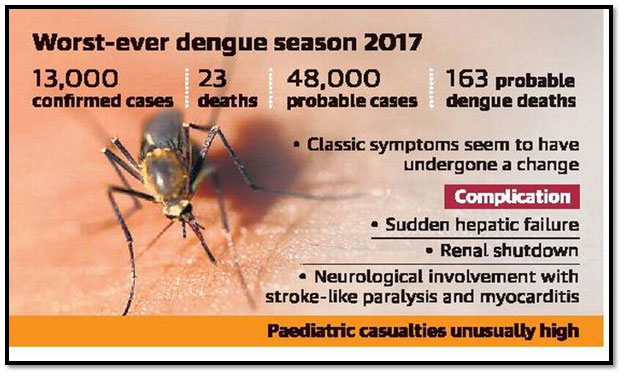
Even as several parts of India are in the grip of severe dengue outbreaks, a team of researchers has found clues about why the mosquito-borne disease might be spreading through the country faster than before. The answer lies in increased temperatures, according to a study published in the journal, Science Advances.
A rise in temperature results in a shorter extrinsic incubation period, which is the time required for the virus to develop in the mosquito, according to the study by scientists from Hyderabad, Guwahati and Liverpool. A shorter incubation period leads to higher transmission rates of dengue infection in a community.
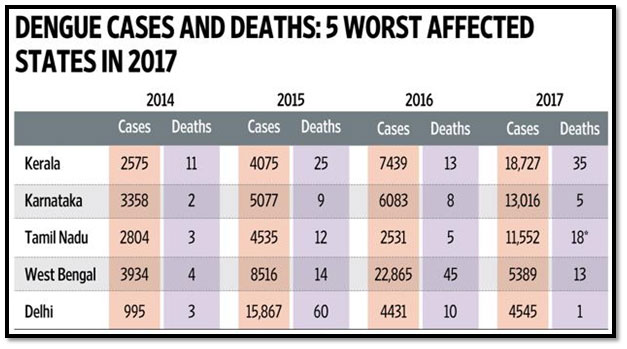
As it turns out, an analysis of the health impacts of climate change published by The Lancet earlier this week cited climate change as a potential factor for the rise in dengue cases. According to another study published in The Lancet, the number of dengue cases has doubled every decade since 1990, with India being no exception. Between 2010 and 2016, India has recorded a 356% increase in the number of dengue cases, according to the National Vector Borne Disease Control Programme.
The study holds important insights into the epidemiology of the dengue infection. In India, according to the data by the National Vector Borne Disease Control Programme, Kerala, Tamil Nadu, and Karnataka reported the highest burden of dengue cases this year.
The burden of disease from dengue is also expected to rise due to factors such as globalization, travel, trade, and viral evolution and the fast breeding and maturation cycles of the Aedes mosquito population, other than the modern dynamics of climate change.
4 Billion People At Risk Of Being Infected With The Fastest Growing Mosquito-Borne Disease
Zika and Yellow Fever have been vying for the spot of the most talked about insect-borne disease lately, but one mosquito-borne disease has been consistently spreading over the past 50 years. Dengue is ranked by the World Health Organization (WHO) as the most important and fastest growing mosquito-borne viral disease in the world today, causing nearly 500 million infections every year.
In the last 5 decades, dengue has spread from being present in a handful of countries to being endemic in 128 countries, where about 4 billion people live. Dengue cases have also increased 30-fold in this time period. In addition, more people are travelling than ever before and millions of travellers to endemic areas are also at risk of being bitten by the disease-carrying mosquitoes. Dengue has important economic consequences because of the significant burden on communities, hospitals, work absenteeism and risk of death of serious cases.
Dengue is transmitted primarily by the Aedesaegypti mosquito, the same mosquito that transmits West Nile virus, Zika and chikungunya. Vector control has been the primary method of disease control - strategies include covering, emptying and cleaning of domestic water storage receptacles, applying insecticides to outdoor water storage containers, and using personal household protection, such as window screens, long-sleeved clothes, and insecticide treated materials, coils and vaporizers. However, in dengue-endemic countries, it has been shown that, despite extensive vector control efforts, outbreaks of dengue still occur and the number of cases remains high.
India Needs To Work More To Keep Dengue In Check:
Earlier this year, the Delhi HC had rapped the Centre for lack of work done in checking vector-borne diseases, saying, "Mosquitoes don't wait for meetings."
However, in a significant development, researchers at Liverpool University, Hyderabad's IICT and Guwahati's NIPER recently identified climatic risks for dengue outbreaks in different Indian climatic zones.
The administration needs to invest more to prevent this disease from spreading further.
Dengue Fever Overview
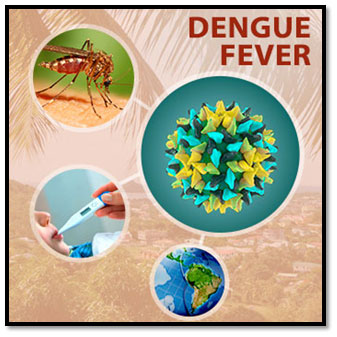
Dengue fever is a disease caused by a family of viruses transmitted by mosquitoes. It is an acute illness of sudden onset that usually follows a benign course. Dengue (pronounced DENG-gay) can affect anyone but tends to be more severe in people with compromised immune systems. Because it is caused by one of five serotypes of the dengue virus, it is possible to get dengue fever multiple times. However, an attack of dengue produces immunity for a lifetime to that particular viral serotype to which the patient was exposed.
Dengue goes by other names, including "breakbone fever" or "dandy fever." Victims of dengue often have contortions due to the intense pain in the joints, muscles, and bones, hence the name breakbone fever.
Unfortunately, the disease incidence seems to be increasing every year. Dengue hemorrhagic fever is a more severe form of the viral illness and the complications of dengue fever are usually associated with the more severe forms of dengue fever: hemorrhagic and shock syndrome.
Symptoms:
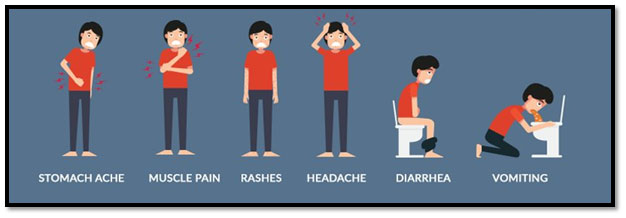
Many people, especially children and teens, may experience no signs or symptoms during a mild case of dengue fever. When symptoms do occur, they usually begin four to seven days after you are bitten by an infected mosquito.
Dengue fever causes a high fever — 104 F degrees — and at least two of the following symptoms:
• Headache
• Muscle, bone and joint pain
• Nausea
• Vomiting
• Pain behind the eyes
• Swollen glands
• Rash
Most people recover within a week or so. In some cases, symptoms worsen and can become life-threatening. Blood vessels often become damaged and leaky. And the number of clot-forming cells (platelets) in your bloodstream drops. This can cause a severe form of dengue fever, called dengue hemorrhagic fever, severe dengue or dengue shock syndrome.
Signs and symptoms of dengue hemorrhagic fever or severe dengue — a life-threatening emergency — include:
• Severe abdominal pain
• Persistent vomiting
• Bleeding from your gums or nose
• Blood in your urine, stools or vomit
• Bleeding under the skin, which might look like bruising
• Difficult or rapid breathing
• Cold or clammy skin (shock)
• Fatigue
• Irritability or restlessness
Treatment:
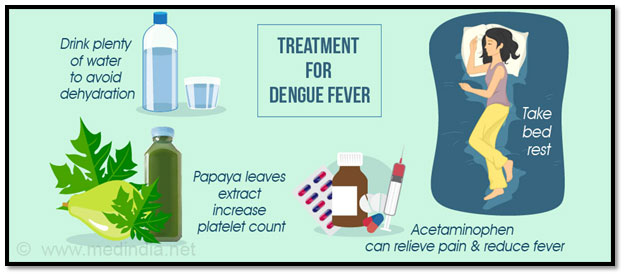
There is no specific treatment for dengue fever exists. Only doctors may recommend drinking plenty of fluids to avoid dehydration from vomiting and a high fever.
Still while recovering from dengue fever, watch for signs and symptoms of dehydration. Consult doctor right away if you develop any of the following:
• Decreased urination
• Few or no tears
• Dry mouth or lips
• Lethargy or confusion
• Cold or clammy extremities
Acetaminophen (Tylenol, others) can alleviate pain and reduce fever. Avoid pain relievers that can increase bleeding complications — such as aspirin, ibuprofen (Advil, Motrin IB, others) and naproxen sodium (Aleve, others).
If you have severe dengue fever, you may need:
• Supportive care in a hospital
• Intravenous (IV) fluid and electrolyte replacement
• Blood pressure monitoring
• Transfusion to replace blood loss
Prevention:
One dengue fever vaccine, Dengvaxia, is currently approved for use in those ages 9 to 45 who live in areas with a high incidence of dengue fever. The vaccine is given in three doses over the course of 12 months. Dengvaxia prevents dengue infections slightly more than half the time.
The vaccine is approved only for older children becausethe World Health Organization stresses that the vaccine is not an effective tool, on its own, to reduce dengue fever in areas where the illness is common. Controlling the mosquito population and human exposure is still the most critical part of prevention efforts.
• Stay in air-conditioned or well-screened housing: The mosquitoes that carry the dengue viruses are most active from dawn to dusk, but they can also bite at night.
• Wear protective clothing: When you go into mosquito-infested areas, wear a long-sleeved shirt, long pants, socks and shoes.
• Use mosquito repellent: Permethrin can be applied to your clothing, shoes, camping gear and bed netting. You can also buy clothing made with permethrin already in it. For your skin, use a repellent containing at least a 10 percent concentration of DEET.
• Reduce mosquito habitat: The mosquitoes that carry the dengue virus typically live in and around houses, breeding in standing water that can collect in such things as used automobile tires. You can help lower mosquito populations by eliminating habitats where they lay their eggs. At least once a week, empty and clean containers that hold standing water, such as planting containers, animal dishes and flower vases. Keep standing water containers covered between cleanings.
Other Solutions:
Aside from vector control strategies and vaccines, it is also important to improve community awareness and participation and promote active monitoring and surveillance of mosquito vectors and dengue disease in clinics and hospitals.
References:
https://www.inshorts.com
https://timesofindia.indiatimes.com
http://www.timesnownews.com
https://www.newsbytesapp.com
https://scroll.in
https://www.huffingtonpost.com
https://www.medicinenet.com