


New Delhi:From temples in Asia, to hippy hangouts in the West, incense is burned all over the world. No Indian puja is ever complete without ringing of bells and showing agarbattis (incense sticks) to the deities.
Millions of Hindus, Buddhists and Christians use these to purify and freshen the air, and as an essential part of their holy ceremonies.But there is a reason you should think twice before lighting another incense stick, especially if you take pride in being a non-smoker. According to a number of studies, you might be inhaling something more dangerous than the cigarette smoke itself.
The smoke coming from those fragrant sticks may be more toxic to the body's cells than cigarette smoke, new research warns.The study conducted by the scientists in South China University of Technology--on two of the most common types of incense-sticks, agarwood and sandalwood--revealed that this everyday ritual of using agarbattis causes much more harm than good to your health.
Researchers found that incense-smoke is more mutagenic (causes DNA changes at cell level), genotoxic (causes genetic changes leading to cancer) and cytotoxic (so toxic that it kills your cells) than cigarette smoke.
Scientists believe, this means that it is able to cause genetic mutations and cause changes in cells' DNA, all of which can lead to cancer.
Given the study's findings, it might be wise for people with lung disease to avoid burning incense, as well as parents with children whose lungs are developing, the researchers said.
When incense, which is usually made of bamboo sticks coated in sawdust and essential oils, is burned, particles are released into the air.If these are breathed in they can become trapped in the lungs, and are known to cause an inflammatory reaction.
Until now, not much research has been done on incense as a source of air pollution, although it has been linked to the development of lung cancer, childhood leukaemia and brain tumours.
7 reasons to say NO to Agarbattis or Incense Sticks: The researchers assess the health hazards associated with using incense smoke in the home.
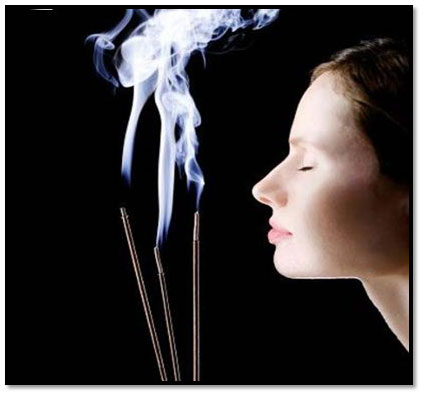
It increases your risk of COPD and asthma
The pollutants that are released from burning incense sticks cause inflammation of the bronchial tubes that pass air to the lungs. These sticks contain sulfur dioxide, carbon monoxide, oxides of nitrogen and formaldehyde (in particulate as well as gas form), leading to inflammatory responses such as COPD and asthma, when regularly exposed. The amount of smoke inhaled by the lungs is the same as when exposed to cigarette smoke.
It causes skin allergies
It is a fact that long-term exposure to agarbattis smoke causes irritation of the eyes, especially in kids and older people. In addition to this, people with sensitive skin also experience itching of skin when come in contact with pollutants and smoke on an everyday basis. Alsoareas with thin skin (such as skin around the eyelids, at the base of the nose and elbow region) are most susceptible to allergy. The particulate matter present in the smoke of agarbattis causes skin irritation and allergy.’
Triggers neurological symptoms
Common neurological symptoms that were found to be associated with daily exposure to incense sticks were increased headaches, difficulty in concentrating and forgetfulness. The burning of incense sticks contributes to indoor air pollution, which in turn increases the concentration of carbon monoxide (CO) and nitrogen oxide (NOx) in the blood. The high concentration of these gases causes neurological problems by acting on brain cells.
It may lead to respiratory infection
According to a recent study, incense sticks come with a health threat. The results proved that burning agarbattis inside the house generate air pollutants, namely carbon monoxide. The smoke causes indoor air pollution that may lead to inflammation of the lung cells, putting you at an increased risk of respiratory complications. Most people experience coughing and sneezing due to hypersensitivity that is caused when a person inhales smoke in excess. In rare cases, chocking might be caused if excess smoke is inhaled. Read how gem therapy can help treat respiratory ailments.
It heightens risk of respiratory cancer
Have you ever thought that burning incense sticks might put at an increase risk of cancer of respiratory tract? A study that appeared in the Journal of the American Cancer Society stated that long-term exposure to incense sticks (agarbattis) put you at an increased risk of upper respiratory tract cancer. It further proved that with the use of incense, the risk of upper respiratory tract ‘squamous cell carcinoma’ is comparatively high in smokers than in normal people.
Increases the toxic load on the body
Studies have shown that incense sticks, when burnt; emit a toxic smoke that contains lead, iron and magnesium, thereby adding to the toxic load in the body. The chemical gases and particulate matter, when inhaled, increase load on the kidneys to eliminate toxins from the body, leading to various kidney problems. The smoke liberated from lighting the incense stick also increases the concentration of impurities present in the blood.
Impairs cardiovascular health
The agarbattis that you use daily can have a negative effect on your heart health. The study estimated that long-term use of incense sticks increased the risk of cardiovascular mortality by 12% and coronary heart disease by 10%. It is mainly caused due to increased inhalation of agarbatti smoke (containing volatile organic compounds and particulate matter). It also increases blood vessel inflammation and affects blood flow leading to heart complications.
References:
http://indiatoday.intoday.in
http://www.thehealthsite.com
http://www.dailymail.co.uk