

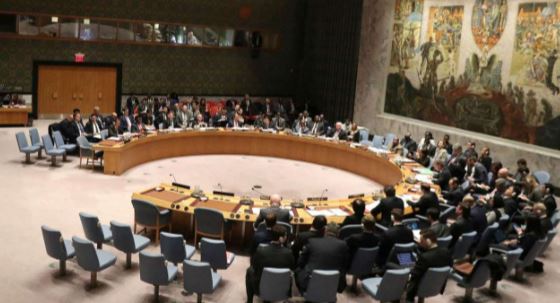
India on Monday voted against a largely western attempt to rush the climate change issue at the United Nations Security Council, questing the need for the resolution when the issue is already being dealt under the UNFCCC or United Nations Framework Convention on Climate Change. The resolution, which was eventually not adopted was jointly presented by Niger, the president of the body for this month, and Ireland and backed by the United States, the United Kingdom and the European Union.
In the explanation, the Indian envoy to United Nations TS Tirumurti said, "India is second to none when it comes to climate action and climate justice. But the UN Security Council is not the place to discuss either issue. In fact, the attempt to do so appears to be motivated by a desire to evade responsibility in the appropriate forum and divert the world’s attention from an unwillingness to deliver where it counts."
The resolution was seen as a western attempt to evade its responsibility on climate finance responsibility, which has been dominating the climate debate especially at the recently concluded Glasgow climate summit. The Indian envoy highlighted, "Developed countries must provide climate finance of $1 trillion at the earliest. It is necessary that climate finance be tracked with the same diligence as climate mitigation. And the reality, Mr President, is that the developed countries have fallen well short of their promises. This is particularly important to recognise because today’s attempt to link climate with security really seeks to obfuscate lack of progress on critical issues under the UNFCCC process."
At the high table, out of 15 countries, 12 supported it, 2 voted against-- India, Russia and Chinese abstained from it. Russian veto led to the resolution not being adopted. Interestingly, this was the first usage of veto by any permanent member of the council this year. And despite 12 voting in support, all was not picture perfect. Three countries of the council did not co-sponsor it-- France which is a permanent 5 member of the UNSC, Kenya and Vietnam. Essentially three Asian members of the council had no enthusiasm for it--India voted against, China abstained and Vietnam did not co-sponsor.
Pointing to the "manner in which this issue has been brought before the Council", Envoy Tirumurti highlighted, "the honest answer is that there is no real requirement for this resolution, except for the purpose of bringing climate change under the ambit of the Security Council. And the reason for that is now decisions can then be taken without the involvement of most developing countries and without recognizing consensus. And all this can be done in the name of preserving international peace and security."
He pointed, "many of the UNSC members are the main contributors of climate change due to historical emissions. If the Security Council indeed takes over the responsibility on this issue, a few states will then have a free hand in deciding on all climate-related issues. This is clearly neither desirable nor acceptable."
US and China, both permanent members of the UNSC, are the top two emitters globally. UNFCC is a larger platform to discuss the climate issue and has 197 countries as parties to it as compared to 15 at the council.
Before the resolution was taken up, attempts were made to defuse the situation. Russia, India, China suggested a presidential statement on Sahel and climate change. The Sahel is referred to as a large region in northern Africa having a semi-arid climate, and Niger is part of that region. Brazil, which will become a non-permanent member of the UNSC from 1st January had also written a letter.
This is not the first time Russia, India, China and Brazil has taken a similar approach on the issue. A decade ago in 2011 when Germany had raised the issue at the council, BRICS had taken a similar position. All members of the grouping were members of the council that year. This year, despite attempts to find an amicable solution west, seem to be thrusting through, and the intent was seen as a take it or leave it approach.
(With inputs from agencies)