

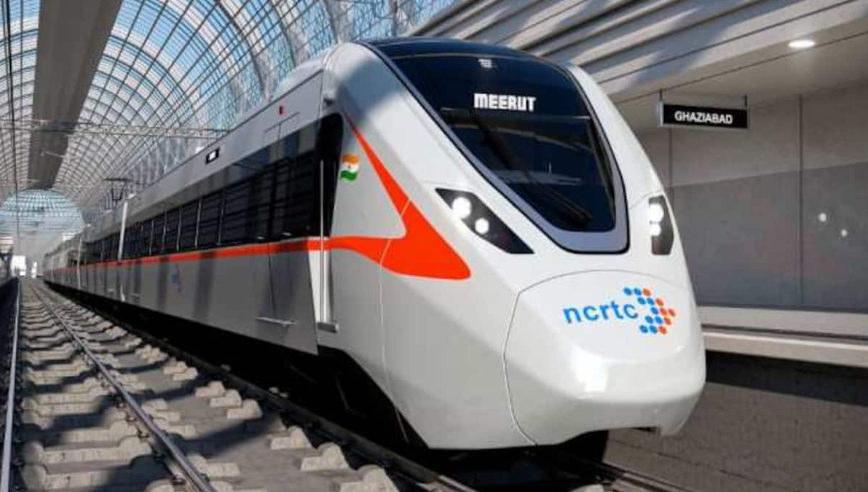
Prime Minister Narendra Modi has introduced a new mode of transportation in India with the inauguration of the priority section of the Delhi-Ghaziabad-Meerut RRTS also known as NaMo Bharat. The train operated in this section will be operated on a 17-km stretch covering five stations in Uttar Pradesh. Later on, the rapid rail system will be integrated with other modes of transportation including Delhi Metro to develop a multi-modal transportation system.
The citizens in Delhi are familiar with the Delhi Metro and have adopted it as one of their preferred means of transportation. However, the scenario is about to change because of the presence of RRTS. Seemingly similar, both of these train systems are significantly different from each other but are meant to improve public transport in NCT while functioning together.
Here we discuss significant differences between the Delhi Metro and NaMo Bharat train system.
The NaMo trains are equipped with facilities like air conditioning, heating, ventilation, luggage racks, dynamic route charts, 2x2 transverse seats, and extensive standing space. Delhi Metro has a longitudinal seating arrangement that provides more space for standing passengers in every coach.
The RRTS network differs from metro services in that it accommodates passengers who want to travel at higher speeds and comparatively longer distances with fewer stops. Along a designated route, the National Capital Region Transport Corporation (NCRTC), which constructed the project, will offer dependable, high-frequency, point-to-point regional transport at a fast pace, setting it apart from the traditional railway system.
As a result, eight RRTS corridors are to be created in the National Capital Region (NCR). Of these, three corridors—the Delhi – Ghaziabad – Meerut Corridor, the Delhi – Gurugram – SNB – Alwar Corridor, and the Delhi – Panipat Corridor—have been given priority for implementation in Phase I.
(With inputs from agencies)