

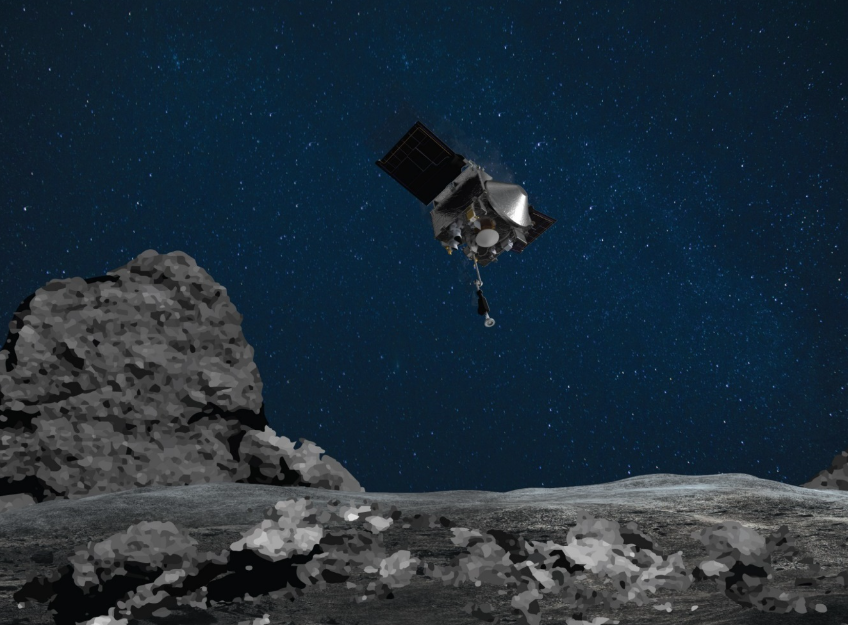
After a seven-year space odyssey, a Nasa capsule successfully landed back on earth at a desert in America's Utah, carrying with it the largest samples of asteroid ever collected by humans.
Scientists are excited about what they will find from studying the samples, as it may give us a better understanding about the formation of our solar system and how Earth became a habitable planet.
The Osiris-Rex probe's final, fiery descent through Earth's atmosphere was closely watched across the world due to the perils involved during its re-entry.
The capsule made a successful soft landing at a military test range in northwestern Utah.
The probe was launched back in 2016 and landed on the asteroid "Bennu" in 2020.
It managed to collect roughly nine ounces (250 grams) of dust from the asteroid's rocky surface. Scientists anticipated getting at least a cup of rubble from the carbon-rich asteroid.
About a teaspoon was returned by Japan, the only other country to bring back asteroid samples.
Nasa said that even such a small amount of asteroid dust should "help us better understand the types of asteroids that could threaten Earth" and cast light "on the earliest history of our solar system."
"This sample return is really historic. This is going to be the biggest sample we've brought back since the Apollo moon rocks were returned to Earth," Nasa scientist Amy Simon had told AFP earlier.
(With inputs from agencies)