

Democracy is not a mere word nor a matter of convenience. It is a system that is based on certain values, certain ethos. The element of democracy is the empowerment of people through giving them a right to political choice. This itself is facilitated by arguments and counter arguments on matters of economy, governance, foreign policy, defence and the conditions of wellbeing of the society put by different political contenders and contestants for getting peoples’ mandate to govern through elections held at intervals of time.
This opportunity of political choice is made easier when different political parties place their manifestoes before the electorate, exemplifying the future roadmap of policy and governance. The verdict of the electorate is taken as a mandate to the majority party or coalition to keep its promise with the people mentioned in the manifesto. The opposition is naturally expected to point out the failures on the part of the ruling party to implement their promises made at the time of election held.
The government is under obligation to govern according to the agenda it got mandate for. Opposition has a right to oppose policies of the government if they are against what it said at the elections. The government can take policy decisions even on matters not finding a place in its manifesto if it is considered of national interest or what can be said to be in the interest of the wellbeing of the people at large.
Opposition has a legitimate right to warn the government on national issues and policies. But opposition cannot insist on obstructing the functioning of the government by forcefully preventing it from taking decisions on behalf of the people who elected it to power or conversely compel it to make a particular decision of its liking or withdraw a policy decision if it was against the agenda or the political preferences of the opposition.
The essence of my argument is that in a constitutionally governed democracy, the government has a right to govern without unnecessary hindrances and the opposition has a right to oppose without challenging the sovereignty of the state and without threatening the legitimacy of the party in power. Thus, both are very important wheels of democracy and government. That every political actor and the stakeholder discharge his/her role within the constitutional boundaries and morality is what is implicitly and explicitly given under our own constitution where sovereign power of the people is exercised through the democratically elected government.
The above balance of power was very well maintained during the one-party dominant system prevailing at the Centre for most of the time up to 1980s and in the states up to 1960s with some ups and downs even later up to 1970s. With the advent of competitive politics, this balance was sought to be disrupted by frequent imposition of President’s rule by the Centre in most of the opposition ruled states. Still, the government was criticised and opposed on constitutionality and partisanship. There was hardly an element of personal or partisan enmity in mutual criticism or defence of the policies.
People went to jail even during Emergency of 1975 without resorting to any violent action against the government or without questioning the sovereignty of the state. It was something of a peaceful satyagrah even though a large number of political and social leadership -- higher and middle range -- was put behind the bar by the then government. No ‘tukde-tukde’ voices or no hate campaign against Mrs Indira Gandhi in the manner one observes today against Prime Minister Narendra Modi. Civility and respect for debate could be seen both inside and outside the parliament both by the governing and opposition parties when non-BJP governments were in power.
The opposition went to the people in the 1977 general elections and exposed the authoritarian threats to democracy and urged the electorate to vote it to power. The Janata party government was thus formed. The ‘eminent’ of the country, whether in the universities, films or arts never wrote ideologically goaded provocative/instigative articles or delivered speeches or organised debates, unconstitutional and extra constitutional governance occurring at times notwithstanding, tantamounting to hate campaigns as is the order of the day now.
No opposition party or social activist or educational leader ever tried to undermine the legitimacy of the constitution by manufacturing/organizing dissent to dethrone the elected government as is the attempt today. Freedom of speech and expression was exercised within the prescribed confines of the constitution. The respect for the constitutional authorities were not sought to be berated or derided unlike today when any decision of the constitutional institutions is opposed to erode the peoples’ confidence in democracy and democratic governance particularly if it is not to the liking of the opposition. I am putting certain facts in the public domain even at the risk of being termed as biased or partisan because it is necessary to do so in the public interest.
To cite some examples, Credibility of the election commission and the validity of elections was sought to be eroded when the opposition lost elections in the states over enacting a fake controversy over EVMs. The judiciary was sought to be intimidated through various strategies, including impeachment of ‘uncomfortable’ judges, and putting judiciary under the shadow/shroud of suspicion.
Questions were raised about the integrity and honesty of the Executive and of the armed forces on the dismantling of terror camps on the soil of Pakistan. Parliament’s supreme authority to make laws is under question by the opposition even though the laws were passed after a prolonged debate. But opposition will not accept and oppose them merely because it is not to their liking and will employ means of doing so which no democratic constitutional system would ever accept.
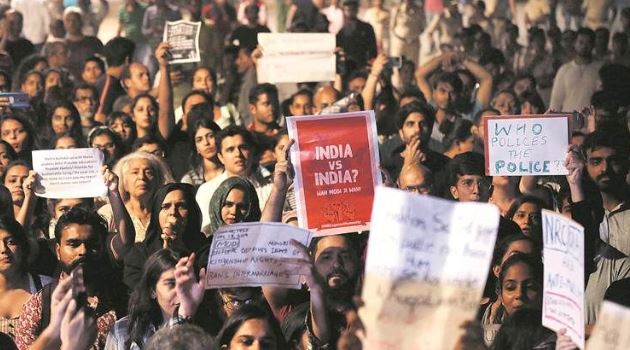
Take for instance the opposition to the parliamentary law on Article 370 and 35A or the law on CAA. The way the minority community has been misguided and misinformed to come out on the streets and engage in anarchic acts and anti-people behaviour is unacceptable in democratic India. The debate on CAA in the parliament and the clarifications issued by PM and the Home Minister of the country that citizenship is not against any indigenous community, specially Muslims. It is meant to provide citizenship to the persecuted religious minority communities coming from three Islamic states including Pakistan and Afghanistan before 2014.
Still the Muslims are being misled to believe that CAA is anti-Muslims. Such like opposition would only help the forces inimical to India, the most likely beneficiary of this slanderous campaign is Pakistan which the parties like TMC, Congress and others do not want to be referred by the ruling dispensation.
The opposition ruled states, like West Bengal, Kerala, Madhya Pradesh etc are openly acting as independent units of India implicit in their opposition to implementation of the CAA. It is such like change in the political mindset of the opposition that indicates that the malaise is much deeper than merely a fight for so called right to dissent. The failure of the opponents to defeat Modi through ballot seems to be moving force behind anarchic narrative. The impact of such campaigns undertaken recently is not merely political having domestic ramifications, the violence and mystical and false campaigns are also damaging international image of India which was rising to new heights. The economy of the country is being pulled downward as it affects tourism as well as foreign investments.
An environment of uncertainty, a by-product of post truth politics is going to hit the Indian economy and the society very hard. The opposition may use it for its partisan benefit later, but at what cost? If Pakistan gets a message that the opposition and government are not on the same page on the matter of national security threat from Pakistan, it may be tempted to disrupt the security and integrity of India.
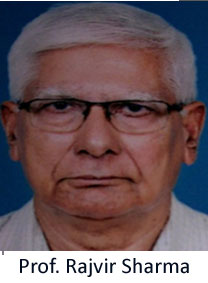
(The author is Fellow at Indian Institute of Advance Studies, Shimla)