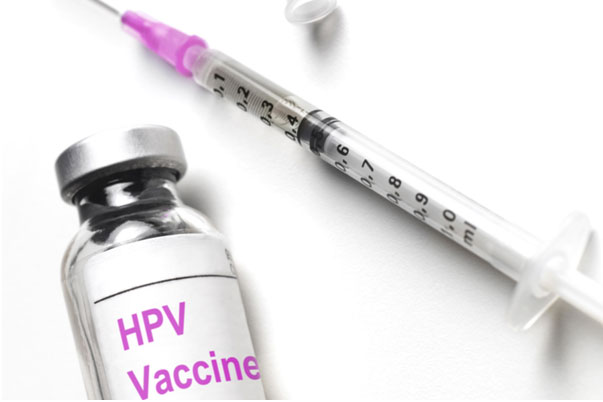
New Delhi: With the country’s highest decision making body on vaccines set to take a call in its next meeting on the introduction of cervical cancer vaccine in the Universal Immunisation Programme (UIP) there has been already a lot of controversy revolving around the introduction of vaccine in India.
RSS affiliate Swadeshi Jagran Manch (SJM) has red-flagged any plan to introduce the Human Papilloma Virus vaccine, funded by the Bill and Melinda Gates Foundation and Indian Council of Medical Research.
SJM maintained that HPV vaccine could lead to an unmitigated tragedy. In a letter to Prime Minister Narendra Modi, SJM has claimed that “unethical” trials of the vaccine was allegedly cause of many deaths of tribal children in Andhra Pradesh.
In a letter to the Prime Minister, Swadeshi Jagran Manch’s (SJM) national co-convener Ashwani Mahajan has said, “It is our concern that this programme will divert scarce resources from more worthwhile health initiatives diverting it to this vaccine of doubtful utility and that its adverse effects will erode confidence in the national immunization programme and thereby expose children unnecessarily to the risk of more serious vaccine-preventable disease.”
“Swadeshi Jagran Manch requests you to stop this move to introduce Human Papilloma Virus (HPV) vaccine in India and we recommend the strongest action against groups that pervert science, which brings ignominy to the scientific community in the country and sells the country to vested interests,” it added.
The letter comes against the backdrop of a National Technical Advisory Group on Immunisation (NTAGI) sub- group recommending introduction of HPV in UIP. The recommendation was to be taken up in a meeting of NTAGI on December 6. However, the meeting was postponed as it clashed with another meeting in the PMO.
HPV is associated with more than 80 per cent cervical cancers. Data from the national cancer registry shows that in 2013, 92,731 cases of cervical cancer were reported in India, a figure that is projected to go up to 1, 00,479 in 2020.
What is HPV?
Human papillomaviruses (HPVs) are a group of more than 200 related viruses. More than 40 HPV types can be easily spread through direct sexual contact, from the skin and mucous membranes of infected people to the skin and mucous membranes of their partners. Other HPV types are responsible for non-genital warts, which are not sexually transmitted.
Sexually transmitted HPV types fall into two categories:
- Low-risk HPVs, which do not cause cancer but can cause skin warts (technically known as condylomata acuminata) on or around the genitals and anus. For example, HPV types 6 and 11 cause 90% of all genital warts. HPV types 6 and 11 also cause recurrent respiratory papillomatosis, a disease in which benign tumors grow in the air passages leading from the nose and mouth into the lungs.
- High-risk HPVs, which can cause cancer. About a dozen high-risk HPV types have been identified. Two of these, HPV types 16 and 18, are responsible for most HPV-caused cancers.
Why are these vaccines important?
Widespread vaccination with Cervarix or Gardasil has the potential to reduce cervical cancer incidence around the world by as much as two-thirds, while Gardasil 9 could prevent an even higher proportion. In addition, the vaccines can reduce the need for medical care, biopsies, and invasive procedures associated with follow-up from abnormal cervical screening, thus helping to reduce health care costs and anxieties related to follow-up procedures.
Until recently, the other cancers caused by HPV were less common than cervical cancer. However, the incidence of HPV-positive oropharyngeal cancer and anal cancer has been increasing.
In India, 122,844 women are diagnosed with cervical cancer while 67,477 die from the disease annually. Two vaccines — Gardasil and Cervarix — are available in India. The first is quadrivalent and gives protection from not just HPV but also genital warts among other conditions. Cervarix is bivalent and offers protection from two HPV types.
But these vaccines carry a vast number of concerns with it.
The shots of vaccine are very expensive. Gardasil costs Rs.2, 700 per dose and WHO recommends two doses, in the 9-13 age groups.
There are other gynaecological concerns such as white discharge that screenings (pap smears) can pick up. They have more value. Many believe that the vaccine could just be used as a shortcut for all things related to women’s health issues, leaving a host of other concerns unattended.
Proponents of the vaccine, including the World Health Organisation (WHO), have said that interventions such as screening and vaccination need to coexist and can even eliminate the cancer.
But screenings cannot be equated with vaccinations everytime. Women who go in for screenings may not maintain the three-year regimen of getting checked again. It is also likely for a cancer to not get picked up by a pap smear. The vaccine gives protection for the next 10 years and its primary prevention is to avert the risk as against screening that is secondary prevention.
At the end the decision to vaccinate or not hinges on parents. Improved personal hygiene, availability of running water in washrooms, safe sex, and better nutrition can be some cost-effective measures which can lead to drop in these infections.
References:
http://indianexpress.com
http://www.newindianexpress.com
http://www.thehindu.com
https://www.cancer.gov/