
New Delhi: Looking for tattoo designs to add to your style statement? Well, you’re not alone. Almost every other person in India and outside India has a tattoo embossed on his body.
Gone are the days of inscribing stuff on stones and palm leaves, now, it’s on our skin, our bodies! Just like body piercing took the world by storm few years ago, modern simple tattooing has become a rage among youngsters of India. They just want to make these lovely tattoos a part of their bodies. And, all thanks to the growing popularity of tattooing amongst youngsters that it has involved into the most established art form in the country.
Tattoo designs are become trendier day by day and capture our senses quickly. Men and women wear tattoos for style and flaunt them in public. Although, in old days, tattoos were very popular amongst sailors, bikers, prisoners etc, but today, tattooing has taken a deep dive into old and young alike who know the best place to get a tattoo. Even celebrities are getting a tattoo and showing them in public or posting pictures on social network.
“Getting a tattoo is not only a style statement but also a way to express your belief, thinking and the phase you are going through in life,” says Neeti, a private firm employee, who got a Taurus Zodiac sign inked on back neck. “It is for fun. It gives me a different identity and I am enjoying it,” she adds.
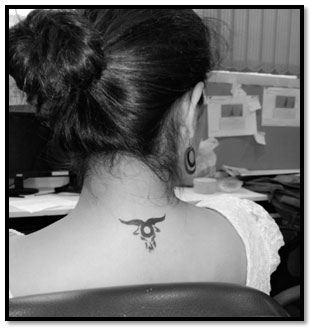
True to the sense, sporting a tattoo is no more a taboo. Youth, whose parents may sneer at them for sporting tattoos, play safe by getting inked on shoulders, biceps and areas that usually do not get exposed. They keep changing the tattoo designs and post pictures on social networking websites, sharing them with their friends. But besides this, how many tattoo-toting men and women know the truth about the tattoo inks that were injected under their skin? If you are thinking about getting a tattoo, do you know which tattoo inks are safe and which ones are not?
Know the health risks:
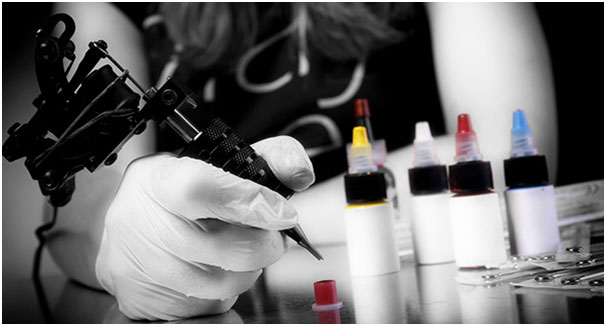
A tattoo is a permanent mark or design made on your skin with pigments inserted through pricks into the skin's top layer. Typically, the tattoo artist uses a hand-held machine that acts much like a sewing machine, with one or more needles piercing the skin repeatedly. With every puncture, the needles insert tiny ink droplets.
A frighteningly growing number of teens and young adults around the world are injecting dangerous chemicals under their skin in the name of art and self-expression. One can say that because it is the first time that there is analytical evidence of the transport of various organic and inorganic pigments and toxic element impurities as well as in depth characterization of the pigments ex vivo in tattooed tissues- according to a study published in Scientific Reports on 12 September by scientists from Germany and the ESRF, the European Synchrotron, Grenoble (France).
According to the study, the elements that make up the ink in tattoos travel inside the body in micro and nanoparticle forms and reach the lymph nodes. Researchers found deposits of titanium dioxide, which is a pigment mixed with colorants, migrate from the skin to lymph nodes that regulate body's immune system. And, delayed healing, along with inflammation and itching, was also linked to titanium dioxide.
However, State and local authorities are charged with regulating tattoos in their area, but only recently, with the growing number of tattoos; researchers have shown some interest in the safety of ink.
Tattoo inks include the pigment, and a variety of metallic salts (e.g., oxides, selenides, sulfides), organic dyes, or plastics, and the carriers with which they are mixed to help provide an even application of the ink.
According to an Environmental Health News report; Phthalates and benzo(a)pyrene are two of the most harmful chemicals present, both having been linked to cancer and endocrine disruption.
Some other recent studies have been done to see the possible long-term effects of tattoo inks. These studies are few and far between, but are the beginning of really getting to know the possible skin and health reactions to tattoos. Some fairly common reactions to tattoo ink include allergic rashes, infection, inflammation from sun exposure, & chronic skin reactions.
Tattoos breach the skin, which means that skin infections and other complications are possible, including:
• Allergic reactions: Tattoo dyes — especially red, green, yellow and blue dyes — can cause allergic skin reactions, such as an itchy rash at the tattoo site. This can occur even years after you get the tattoo.
• Skin infections: A skin infection is possible after tattooing.
• Other skin problems: Sometimes bumps called granulomas form around tattoo ink. Tattooing also can lead to keloids — raised areas caused by an overgrowth of scar tissue.
• Blood borne diseases: If the equipment used to create your tattoo is contaminated with infected blood, you can contract various blood borne diseases — including tetanus, hepatitis B and hepatitis C.
• MRI complications: Rarely, tattoos or permanent makeup might cause swelling or burning in the affected areas during magnetic resonance imaging (MRI) exams. In some cases, tattoo pigments can interfere with the quality of the image.
Therefore; Medication or other treatment might be needed if you experience an allergic reaction to the tattoo ink or you develop an infection or other skin problem near a tattoo.
Things to Consider before you Ink:
Time of Year:
Some experts say the best time to get inked is during a time when your tattoo will have ample time to heal and be covered. Summer is an iffy time for a visible tattoo, since your skin gets more abuse during the warmer months with things like swimming, tanning (even inadvertent tanning), and the fact that we simply wear less clothing.
Health:
It’s not the best idea to get your tattoo if you’re sick—you’ll need your immune system to be at 100%. Your white blood cells are what help heal your tattoo and if your body is busy battling against virus and bacteria, your cells won’t be able to work as hard or as fast. If you already have an appointment and then get sick, call and reschedule.
Safety:
You should make sure that you’re going to a reputable tattoo parlour with experienced artists because chances are they know the correct safety procedures for tattooing. Your tattoo artist should have an autoclave and sterilization certification (don’t be afraid to ask to see them!). You also need to make sure that your artist is wearing gloves. Ointment, ink, water and other items should be returned to a universal container after it has been removed for use on a client.
Risks:
Whenever you’re injecting a substance into your skin, there’s a risk of infection. Some risks include hepatitis, staph, or warts. Using unsterilized tools such as needles, guns or ink can lead to infection, so you’ll want to make sure that your tattoo artist is following safety rules (see below) to keep you healthy and infection free. This risk of infection is why the American Association of Blood Banks requires a one-year wait to give blood after you get your tattoo.
Tanning:
We all know that tanning is already a bad idea, but tanning with tattoos is an even worse. Ultraviolet rays essentially drain the life out of your tattoo, and the more you tan, the more your ink will fade and slowly lose its colour and shape. If you really have to catch some rays, and then make sure you wear sunscreen with the highest SPF level that you can find.
Steps to ensure your safety if you want to have a tattoo:
• Ask to see the Material Safety Data Sheets (MSDS) for each of the pigments or carriers to be used in your tattoo. These information sheets will tell you about the safety and basic health information on each substance.
• Have skin tests performed on each of the inks to be used in your tattoo, even if the professional insists the inks are safe.
• Insist on inks that generally have been shown to be safe. Therefore, look for carriers that include glycerine, ethanol, and purified water rather than toxic chemicals.
• Nontoxic choices for various different colors of pigments include the following: logwood and carbon for black; titanium dioxide for white; turmeric for yellow; monoazo (carbon-based) for green; sodium, or copper for blue; dioxazine and carbazole for purple. Avoid red pigments made from cadmium red, iron oxide, or cinnabar and ask for naphthol.
• Avoid neon or vividly colored pigments, which are more likely to be toxic than other pigments.
• Consider vegan tattoo inks. Numerous companies make pigments that are animal cruelty free. You can check this list of vegan tattoo inks and ask for them by name.
The safest advice of all regarding tattoo inks: Don’t get a tattoo. If you have your heart set on getting one, do your homework and choose the safest tattoo inks available and licensed professionals.
Myths around tattoos:
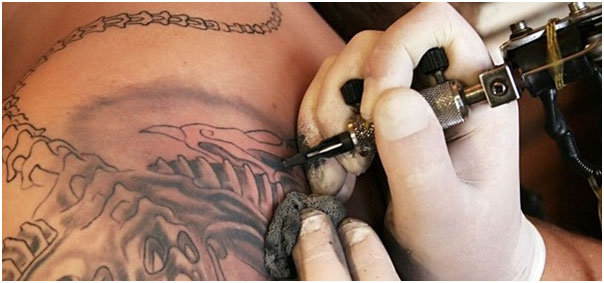 Over the years, the age-old art of tattooing has gained currency among young and old alike and despite professions, ages or residencies, tattoos -- and the myths formed with them -- have left an indelible mark on almost every culture.
Here, a list of some of today’s most common tattoo myths exposed are:
Can't donate blood: The good news for tattooed blood donors, however, you will have to wait a certain amount of time based on each state’s laws, usually about a year, but then you can donate blood again. Donated blood in any case is subjected to mandatory testing, doctors said.
Tattoo cannot be removed: Tattoo can be removed through a laser treatment leaving no scars behind.
Tattoo will fade when you get old: Tattoo needs maintenance. You need to moisturise your tattoo at least once in a day.
Skin allergy and blood poisoning: People have a mindset that getting a tattoo can lead to skin allergies. With the right artist and hygiene factor, it doesn't come up as a problem.
People who are below 18 years cannot get a tattoo: You can surely get a tattoo even if you are not 18. Getting a tattoo will not have any health hazards if you are not 18.
If you have a tattoo, you are disease ridden: Having a tattoo does not determine your state of health. It was believed in past years that tattooing would spread of HIV, hepatitis or other diseases. Thanks to sterilization and regulation of the industry this is nothing but a myth. Every professional artist should be using sterile equipment before tattooing.

References:
http://www.news18.com
http://www.middletownpress.com
http://blog.tattoocultr.com
http://www.mayoclinic.org
http://www.nontoxicrevolution.org