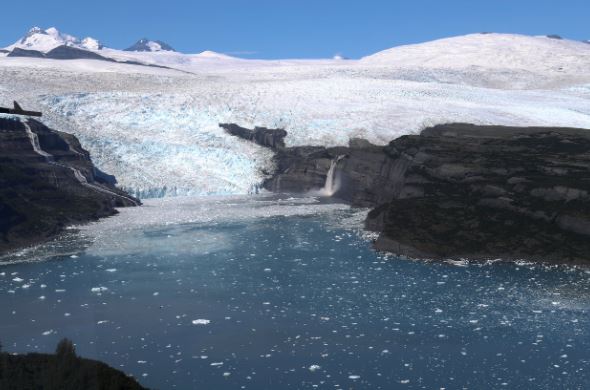
Noting the impact of climate change on glacier movement in the Indian Himalayan region, a parliamentary panel has asked the government to take suitable steps such as constant monitoring through setting up of early warning systems and various adaptation measures to save lives and properties from disastrous consequences of global warming in future.
The standing committee on water resources suggested that the government must make efforts to set up and widen network of high altitude meteorological and discharge stations equipped with modern technology including 'synthetic aperture radar' imagery to detect changes in waterbodies, including new lake formations, glaciers, glacial lakes and watersheds in the region.
The panel's report, tabled in the Parliament early this month, assumes significance in view of the recent report of the UN's Intergovernmental Panel on Climate Change (IPCC) that projected how snow-covered areas and snow volumes will decrease in the Himalayan region during the 21st century due to rising global average temperature, leading to extreme weather events and disruption in water cycle.
"Rising temperature and precipitation can increase the occurrence of glacial lake outburst floods (GLOFs) and landslides over moraine-dammed lakes," said the IPCC, in its report on August 9, predicting that the snowline elevations will rise and glacier mass is likely to decline, causing disastrous events in the region.
The committee, headed by BJP Lok Sabha MP Sanjay Jaiswal, noted that disasters like flash floods and landslides are "expected to become more common in future due to climate change".
(With inputs from agencies)