New Delhi: Diderot, the French philosopher and encyclopedist once said. ‘When one writes about women, one must steep one’s pen in the colors of the rainbow and shatter the dust from butterflies’ wings on the page. With every moment of one's hand a pearl must fall.’
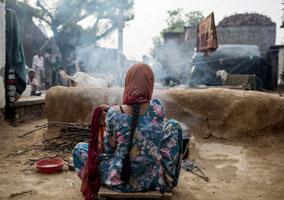
So is the beauty of women which is appreciated by many poets, artists and writers. Society long back gave men and women specific roles. Women taken as a homemaker and a child bearer and men on the other side earns for the living, he has the authority to take decisions at home because he’s the one who runs the family.
Millions of women across India are required to voluntarily give up their individual liberties for the benefit of their husbands, families, society and community. It is true that with growing literacy among women, their conditions have marginally improved in certain states including Kerala and West Bengal.
However, the ugly reality is that women in India are aggressively victimized starting from birth. Girls are denied the same nutritional care as boys, are denied the same educational opportunities and also is responsible to give their best to their god like husbands be it emotional needs, physical needs or even making best shaped chapattis failing to this the woman can be subjected to huge anger and hatred of the husband. This is what happened in the recent case hogging the headline.
A 22-year-woman pregnant woman was killed by her husband following a dispute allegedly over the shape of her chapattis. The husband, unhappy that the chapattis she was making weren't perfectly round, strangled his wife, Simran.
Even though the altercation and subsequent murder took place on Saturday night, the matter only came to light in the early hours of Sunday morning, when the victim's brother notified the police. At around 4 am on Sunday, Simran's brother called the police and told them that his sister was lying unconscious in a room, while her four-year-old daughter was locked up in the other room. The husband was absconding. Simran and her family lived in northwest Delhi's Jahangirpuri area.The couple had been in a live-in relationship for a year before they got married in 2013. However, his business had failed and he had to work at a factory to make ends meet.
The incident has come as a shock to many, shaking the pillars of equality and much claimed equal roles of man and woman in the Indian society. Even though the Indian woman has started questioning the rules laid down for her by society, has begun breaking barriers and there are shining examples of those who have excelled in various fields – from Sania Mirza in sports, to Kiran Mazumdar Shaw in business, to Mayawati in politics, and Arundhati Roy in literature. In the last 60 years, while there have been important policy decisions in favour of women, not much of it has been reflected in everyday reality.
In 1980’s Kamla Bhasin went looking for nursery rhyme books for her young children. But the Indian feminist and social rights worker was disappointed by what she found: In most books, fathers went to work and mothers stayed at home, while little boys went on adventures, and left the little girls behind.So, she took it upon herself to write her own set of rhymes that reflected the progressive ways of her household. The collection was first written in Hindi in the early 1980s and then picked up for publication by UNICEF in 1982. One of her rhymes is below:
It’s Sunday, it’s Sunday
Holiday and fun day.
No mad rush to get to school
No timetable, no strict rule.
Mother’s home and so is the father
All of us are here together.
Father’s like a busy bee
Making us cups of hot tea.
Mother sits and reads the news
Now and then she gives her views.
It’s Sunday, it’s Sunday
Holiday and fun day.
It has been almost four decades but things have still not change. Women are still tortured for dowry, cases of domestic violence and rapes have increased drastically, even though women are touching skies in different arenas be it cricket, Hollywood, business or politics but sadly there still are many simrans dying because they failed to serve their husbands according to their stereotypical roles.