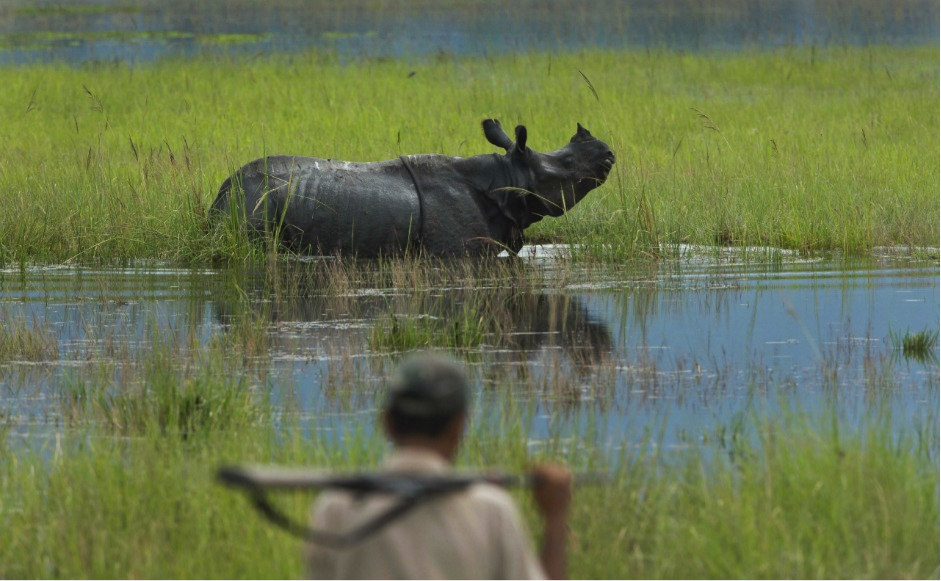
New Delhi: At least 74 animals have already been consigned to watery graves inside Kaziranga sanctuary in one of the worst floods to have hit Assam in past many years.
Hog deer, one of the smallest deer species, took the maximum brunt. Asiatic wild buffalo, wild boar, sambar, eastern swamp deer have also fallen prey to the flood. Officials have managed to rescue 108 animals so far, out of which four are undergoing treatment, including a rhino calf.
Measures are being taken to hold on to the further casualities. Water levels had reached up to six feet in several parts of the park during the peak of the deluge. Most of the area is being patrolled by the national park officials on boats. At the same time the hygiene of the anti-poaching camps are also been taken care of.
The Kaziranga National Park, a UNESCO world heritage site, is home to an estimated 2,500 rhinos out of a world population of some 3,000.
The Park has lost many animals in past few years. Floods have always resulted in huge loss of lives be it in the 2012 floods, 2016 or the recent 2017 floods.
The floods caused by torrential rains across the hilly states of Assam, Arunachal Pradesh, Nagaland and Manipur over the past two weeks, have also triggered landslides. More two million people have been displaced till now.
Assam is the worst hit with 53 lives lost so far in floods and leading to the devastating increase of casualties of animals in Kaziranga National Park till Saturday morning.
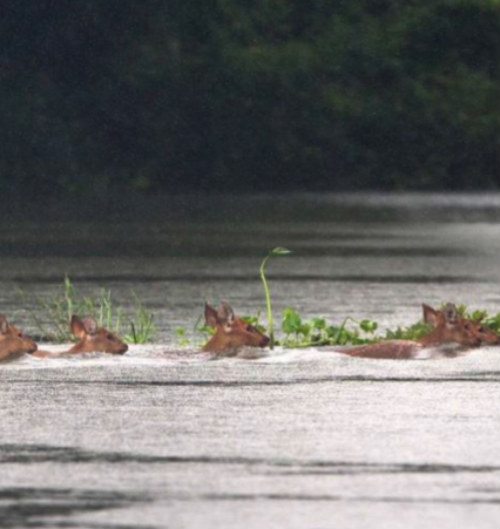
The gravity of the situation can be gauged from the fact that the floodwaters have submerged all the 111 highlands inside the national park, which the animals used as safe havens to retreat to during floods.
Rare species of rhino apart from other animals have been fleeing in hundreds to nearby areas in order to escape the floods in the northeastern states, thereby risking themselves to poaching.
The most affected Kaziranga National Park, which is deluged by waters from flooded Brahmaputra River, is home to the largest concentration of the world's remaining one-horned rhinoceros.