One of the challenges faced in higher education today is the student-teacher engagement. It is an important element in our teaching-learning system. When the society is growing multidimensionally, it faces multifaceted challenges and issues especially with younger generations today. In wake of technology advancement and shifting horizons of knowledge the teachers need to be equipped with multi-pronged skills, tools and approaches. There are various aspects to the whole issue and can be understood in a much wider appeal and perception. “The pivot in education is the teacher… if the teacher improves, the education system will improve” says Anil Swarup, secretary, HRD Ministry, GOI. (Source: The TOI, April,13 2018)
Indian Approach:
India has been the centre and propagator of its own unique ‘Guru Shishya Parampara’, where Guru enjoys the higher pedestal than God, as Guru is the one who illuminates the path of the shishya to reach to the Ultimate. As Kabir puts it, “Guru Gobind dou khare , kake lagoon payein, balihari guru apne, jin Gobind diyo milaye” All the material wealth shall fall short of, while paying tribute to the revered teacher. Guru shishya parampara still continues after ages, especially in learning classical forms of music and dance. We still have Gurukul system, which is much respected. It is after immense questioning, thorough observation and discussion that the inferences are drawn and conclusions are accepted in this system of education.

That is why the social truths in India are the proven and followed facts over the centuries. The teachings of Vedas, Gita, Buddha, Kautiltya, Kabir and Nanak, Swamy Vivekananda, Swami Dayanada still make relevance today even after centuries, more so because all the teachings are the humanistic teachings, the teachings of life and livelihood.
Contemporary Approach:
Coming to the contemporary times however, the contrast which can be drawn is, the reverse pattern of 24X7 hour approach. In Gurukul days it was the shisya who is devoted for 24-hour service to the Guru; today, it is 24X7 hour devotion and availability of the teacher an an accepted norm.
Also, as new technologies take over all fields, teachers need to re skill and up skill themselves. they need to keep adding something new to their knowledge every day. According to a report by McKinsey Global Institute, “more than 375 million workers may need to completely change the skill sets by 2030 because of the newer technologies.” (Source: Albert P Rayan, ‘Teachers for Gen Z’, The Hindu, July 9, 2018). This applies to teaching community too. Aptly may this relate to Thoreau (1817-1862), who said, “You must live in the present, launch yourself on every wave, find your eternity in each moment.” Definitely, to chalk out the teaching path, one needs to continually step out into the unknown.
Mindful Student-Teacher Engagement:
Teaching is noble profession. It is the teachers and the students who make it noble and create pious environments conducive for pure leaning. For the same a teacher needs to adhere to the ethical guidelines themselves and also teach and preach the same. Because the onus of making the society lies not on the industry but on the teachers. Perhaps, there are practical practices of the profession which the students need to inculcate, but the moral and ethical teachings are the ones on which the working of all the industries rests, and are inculcated by the teachers. Therefore, while making the students industry ready with skills, ample stress needs to be put on the basic core values of our meaningful existence, to show the path to the young on their personal and professional fronts.
Guidelines for a Mindful Teacher:
- Please be sensitive to the needs of students.
- Use your language mindfully, each word counts and means a lot to the student.
- Avoid entering into altercations with the students. Do not get down to their levels or to their language on small stifling matters.
- Consider them as your students and not as your colleagues. Please be mindful towards them and always encourage them, no matter what.
- Please do not ignore smallest of the query of the student. Respect the students for their knowledge as well as for their ignorance.
- Be strict but understand and lend your year for their problems.
- Use satire or mockery with care, as student is undergoing different pressures from within and outside viz.; inferiority or superiority complex, language issues, adjusting issues in a bigger city, coping up with loneliness, managing financial issues , family issues, depression issues, medical problems and problems of the peer pressures, study pressure, low self-esteem, low confidence levels etc. , the mocking comments may impact them adversely.
- Do not at any cost make personal comments on students, it may aggravate their already existing problems. They are very touchy at this age and stage of their new found selves and may react in unpleasant ways and manners which may undermine your position as teacher.
- Maintain good relations with students, but at the same time keep considerable gap to respect the student- teacher relationship. Respect them as individuals.
- In order to understand the student and their background, however be mindful to, not to intrude into the privacy of the students, understand and take note of that thin line, where you need to stop.
- There is a thin line between helping and intruding into the privacy of another person, do not cross that line.
- Understand and know clearly, what is the information to be shared with the students and what is not to be shared.
- Also, know and understand what to discuss in front of the students and what not to discuss in front of them.
- Do not encourage physical touch. Especially, in case of opposite genders, it may result in problems.
- Accept the apologies of the students, whenever they do so, as their egos are much higher than yours. As they are at leaning phase, it is after huge in-fight within them, that they would have arrived at it. So, value it and put the student on the right path.
Always keep in mind that you may be in 21st century, but you still are the role model for students, as ‘Guru’ in Guru-shishaya parampara, our heritage. They do look up to you, for all their queries and problems and seek solutions. They are not your subordinates who will follow and do as you wish, they need to be allowed their own ways to bring out the best in them with your guidance. They also, are not your enemies, and they should not have the feeling that a particular teacher hates or loves them. Even if having favourites, all the students should be equal for a teacher, so they respect you in complete objectivity. Do not exhibit likes or dislikes. While the student may seek options to please the teacher to get into their good books, the teacher must remain oblivious of it.
Class Management: ‘Teaching is a Performing Art’
I Pre-class Preparation
- Know your students: their levels, their backgrounds as far as possible.
- Understand their: Achievements, strengths, weaknesses, medical history, failures, internships, aspirations, skills etc.
- Study the content and prepare the lecture well with examples, case studies, related humour, questions etc.
- Prepare lectures with Text-Audio-Video and more.
- Know the infrastructural issues and remain prepared for alternate mode of instruction.
- Rehearse the presentation of the lecture and assess probable question.
- Keep plan B ready (other chapter, other issue to discuss, any activity), in case students don’t want to study or if you need to take an extra lecture etc.
- Think of topic of discussion related to topic.
- Develop mechanisms to take feedback of the lecture.
- Get decently and comfortably dressed, so that the students do not deviate in your lecture from your intellectual being to physical attire or physical attributes.
II During the Lecture
- Wear the confident looks to look pleasant, happy, active and interested in teaching.
- Settle and greet the whole class.
- Start with a lighter mood to get into the serious stuff gradually.
- Induce ‘energy’ into the class by asking questions and proving your points; and ‘synergy’ by letting them ask questions and solving their queries.
- Keep the class engaged through - eye contact, gestures, aids and tools, humour, pretend and act, solve the queries.
- Understand and tackle the deviating questions, by saying you’ll come back to it and take it up at your convenience.
- Appreciate the ones who ask questions and encourage those who don’t.
- Follow a structured pattern but break the monotony in between.
- Must sum up the lecture and end on a pleasant note with exercise or assignment if needed.
- How to scold: tell them right away, catch them red handed, call and talk to them separately, give warnings, complain to the higher authority, in grave cases talk to the parents.
III After/ Beyond the Class Engagement
- Remain available, as you are 21st century teacher, but you can have timings for students’ interaction while, beyond the working hours. Make them understand the value of time and let them value your privacy.
- Develop bonding and emotional contact with the students, not only for yourself, but for all the faculty and the whole ‘Institute’ and the environment as a learning space.
- Use digital space with care, even if they are private spaces, as students keep watch on you and your activities and develop a perception about you.
- Think and share extra and rich range of sources of information as a resource for students to learn from, beyond the curriculum, of current affairs and of their individualistic interests.
- Move always with poise. Always give them the life lessons for being good human beings, believing in the ‘Man Making, Character Building and Nation Building’, espoused by Swamy Vivekananda.
Summary:
Develop connect, commitment, communication skills, organisational skills and the ability to counsel and support wide range of students and parents. Teaching today is extraordinarily complex and important, quality of teacher is no doubt more important than other factors of infrastructural facility and technology for building the characters of individuals and societies.
Contemporary teachers are the facilitators and navigators of skills and knowledge for students rather than only the transmitters of knowledge. Today we need ethical, responsible, intellectual inspiring and mindful teachers for meaningful student-teacher engagement; with deep empathy and compassion, infinite patience and love for learning with abundant energy and sense of fun and wonder.
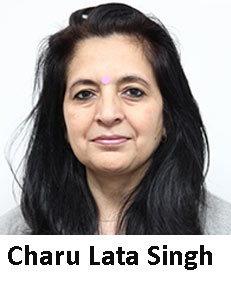
(Prof Dr Charu Lata Singh is Dean, VSJMC, Vivekananda Institute of Professional Studies (VIPS), Affiliated to GGSIP University, Delhi. She can be contacted at This email address is being protected from spambots. You need JavaScript enabled to view it.)